12/8/25
SNS Research Brief 115. Remote Work and Employment among People with Disabilities
Dan-Olof Rooth, Nicholas Bloom, Gordon B. Dahl
Dan-Olof Rooth, Nicholas Bloom, Gordon B. Dahl
Up to four out of five new jobs for people with disabilities can be explained by the rise in remote work after the pandemic, according to a new report in the SNS Analysis series. The research indicates that flexibility in where and how work is performed is key to closing an employment gap that has persisted for decades.
Since the Covid pandemic, remote work has become a more prominent feature of working life. A new analysis from SNS, authored by Dan-Olof Rooth (Stockholm University), Nicholas Bloom (Stanford University) and Gordon B. Dahl (University of California, San Diego), shows that this shift has had particularly large effects for people with disabilities. Although the report is based on US data, the findings are relevant to the Swedish labour market, where similar patterns of exclusion exist.
The report shows that employment among people with physical disabilities increased by more than 14 percent in the United States between 2019 and 2024 – marking a clear break from decades of stagnation. Up to 85 percent of this increase can be attributed to remote work. The results suggest that remote work reduces the burden of commuting and allows for greater control over the work environment.
– Working from home part of the week functions as a new type of work adjustment. Our study shows that flexibility is not merely a convenience, but a powerful tool for increasing inclusion in the labour market, says Dan-Olof Rooth.
Similar patterns are observed in several other countries, including Canada, France and Spain. The authors argue that the results are highly relevant for Sweden, where roughly 550 000 people live with a disability that limits their ability to work. The employment rate in this group is more than 30 percentage points lower than in the rest of the population.
– Remote work reduces several barriers that previously limited labour market participation. It partially eliminates the need for commuting, enables a more controlled work environment, and offers flexibility in working hours and workload. For people with disabilities, this can be crucial for the ability to work full-time, Rooth comments.
The academic study underlying the report also shows that no other groups – such as women, older workers or ethnic minorities – demonstrate similar increases. The effect appears to be specific to people with disabilities.
“This is one of the most promising developments we have seen in decades in the labour market for people with disabilities. It shows that structural barriers can indeed be dismantled,” says Rooth.
The researchers argue that there is significant potential for further improvements in employment for people with disabilities if the shift to more flexible forms of work continues. Beyond the positive effects on individuals’ quality of life, increased employment also strengthens public finances through higher tax revenues and reduced reliance on social benefits.
Key findings from the report
Remote Work and Employment Among People with Disabilities is published in the SNS Analysis series. The aim of SNS Analysis is to make research accessible to decision-makers in politics, business and public administration, and to strengthen the visibility of research in the media. Financial support has been provided by the Jan Wallander and Tom Hedelius Foundation. The authors are solely responsible for the analysis, conclusions and recommendations.
Dan-Olof Rooth is Professor of Economics at the Swedish Institute for Social Research (SOFI), Stockholm University.
Nicholas Bloom is Professor of Economics at Stanford University.
Gordon B. Dahl is Professor of Economics at the University of California, San Diego.

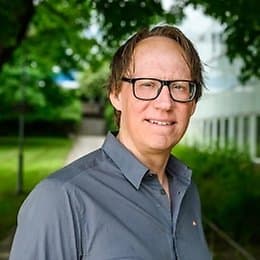
Professor of Economics at the Swedish Institute for Social Research (SOFI) at Stockholm University
Author
Dan-Olof Rooth

Nicholas Bloom is Professor of Economics at Stanford University.
Author
Nicholas Bloom

Gordon B. Dahl is Professor of Economics at the University of California, San Diego.
Author
Gordon B. Dahl



Stay updated with our latest insights, seminars and research news.