Skip to content
SNS Research Brief | 11/11/26

SNS Research Brief 120. The Right Price for Water: How Pricing Can Promote More Efficient Water Use and Better Crisis Preparedness

Mikael Elinder

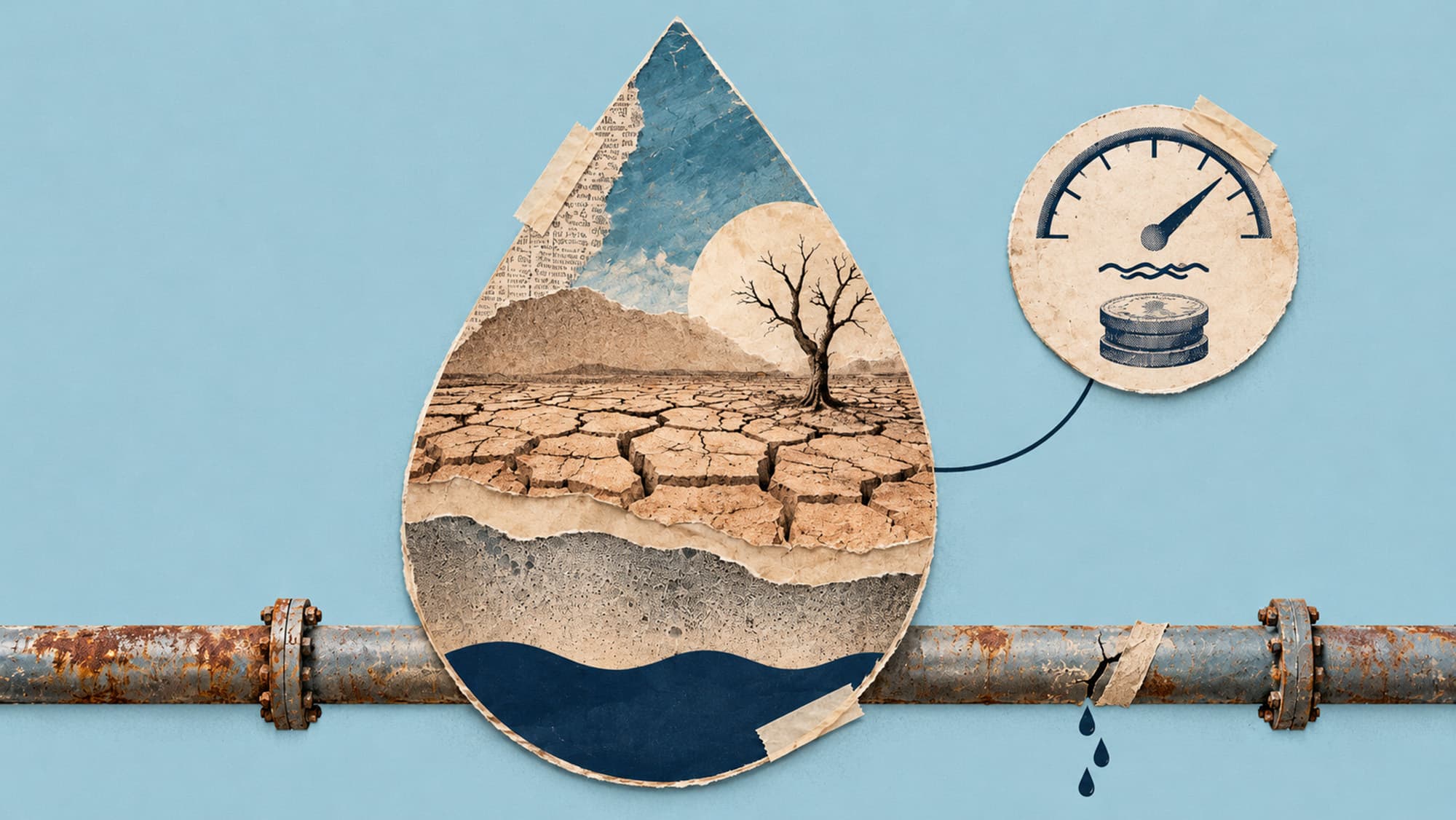
Recurring droughts, falling groundwater levels and ageing pipe networks are putting Sweden’s water supply under strain. Yet when water becomes scarce, its price stays the same. A new SNS report shows that individual billing for hot water cuts consumption by 18 percent, and that Sweden needs to remove the technical and institutional barriers that prevent price from being used as a tool in times of shortage.

This is the conclusion of a new SNS report by Mikael Elinder, Professor of Economics at Uppsala University. The report analyses how water is priced in Sweden today, why the current system is problematic, and which reforms are needed. It draws on economic theory, international research on how households respond to water prices, and a new Swedish study of individual metering and billing (IMD) of hot water in rental apartments in the municipality of Kumla.

Summary

The summer of 2018 was difficult in many parts of Sweden, and this year the authorities have again warned of low groundwater levels in 11 counties. Water shortages are currently handled mainly through appeals for restraint and bans on watering. These measures are blunt, hard to enforce and apply equally to everyone, regardless of how much value people get from the water.

In most other sectors, price does this job. In the water sector it does not. Fees are tied to the municipality’s costs and stay the same however plentiful or scarce the water is. In apartment buildings without individual metering, water is also included in the rent, which means households face no price at all for what they use.

The report shows that households respond when they have to pay for their consumption, that doing so is economically worthwhile even in normal times, and that two barriers stand in the way of better pricing: the rollout of meters, and uncertainty about what municipalities are allowed to do.

Key findings

  • Price does the work, not information. In Kumla, hot water consumption fell by an average of 18 percent when tenants began to be billed for their actual use. The meters had been visible to tenants for several months without any change in consumption. The effect appeared only when billing started.
  • The effect is rapid, lasting and roughly ten times larger than that of information. The reduction took hold within a few weeks and persisted throughout the follow-up period of about eight months. Earlier studies of information and social comparisons show considerably smaller effects.
  • Uniform effect. The reduction was roughly the same in percentage terms, regardless of the household’s original consumption level or the size of the apartment. This contradicts the objection that individual billing hits already thrifty households hardest. High-volume users reduced their consumption the most in absolute terms (litres). Previously, they were subsidised by their thriftier neighbours.
  • Individual billing pays for itself even in normal times. Every krona invested returns SEK 1.17 in reduced resource use, before energy and climate benefits are counted. In an actual water shortage, the return is higher.
  • The transition can be made without raising costs for tenants as a group. In Kumla, rents were reduced correspondingly, so households with normal consumption saw broadly unchanged total costs, and those who saved water paid less.
  • Current rules give municipalities tools for covering costs, but not for managing temporary scarcity. Seasonal tariffs are possible under the Swedish Public Water Services Act, but the scope is unclear, few municipalities have tried them, and there is almost no case law.

The researcher’s recommendations

  • Speed up the rollout of individual metering and billing (IMD) in apartment buildings. Fewer than 25 percent of apartments in Sweden currently have IMD for hot water. Central and local government should make it easier for property owners to install IMD and consider subsidies where the investment is not commercially justified.
  • Ensure that metering infrastructure in detached houses can handle time-varying prices. This means continued rollout of remotely read meters, more frequent readings and billing systems that can handle a tariff that varies over time. Municipalities at high risk of water shortage should be prioritised.
  • Clarify municipalities’ scope for pricing that follows supply. Establish a framework in advance for temporary price surcharges during droughts or disruptions, including compensation for low-income households. Lawmakers should consider whether the cost-recovery principle can be combined with a temporary scarcity surcharge that is triggered by a confirmed shortage, is time-limited, and whose revenue is returned to the collective of customers.
  • Secure transparency and public acceptance. Tenants in Kumla were informed well in advance, could follow their consumption continuously, and were compensated with a rent reduction. A similar approach is a precondition for introducing IMD on a large scale.

Price is the best tool we have for managing water demand during shortages. We should make it possible to use that tool.

Mikael Elinder, author of the report.

About the author

Mikael Elinder is Professor of Economics at Uppsala University. His research spans several fields of economics, including public economics, behavioural economics, environmental economics, health economics and political economy.

  • Author

    Mikael Elinder

    mikael.elinder@nek.uu.se

Categories

Research programs

Subject

More from SNS Infra

Other sns research brief on Housing and Infrastructure

Subscribe to our Newsletter

Stay updated with our latest insights, seminars and research news.