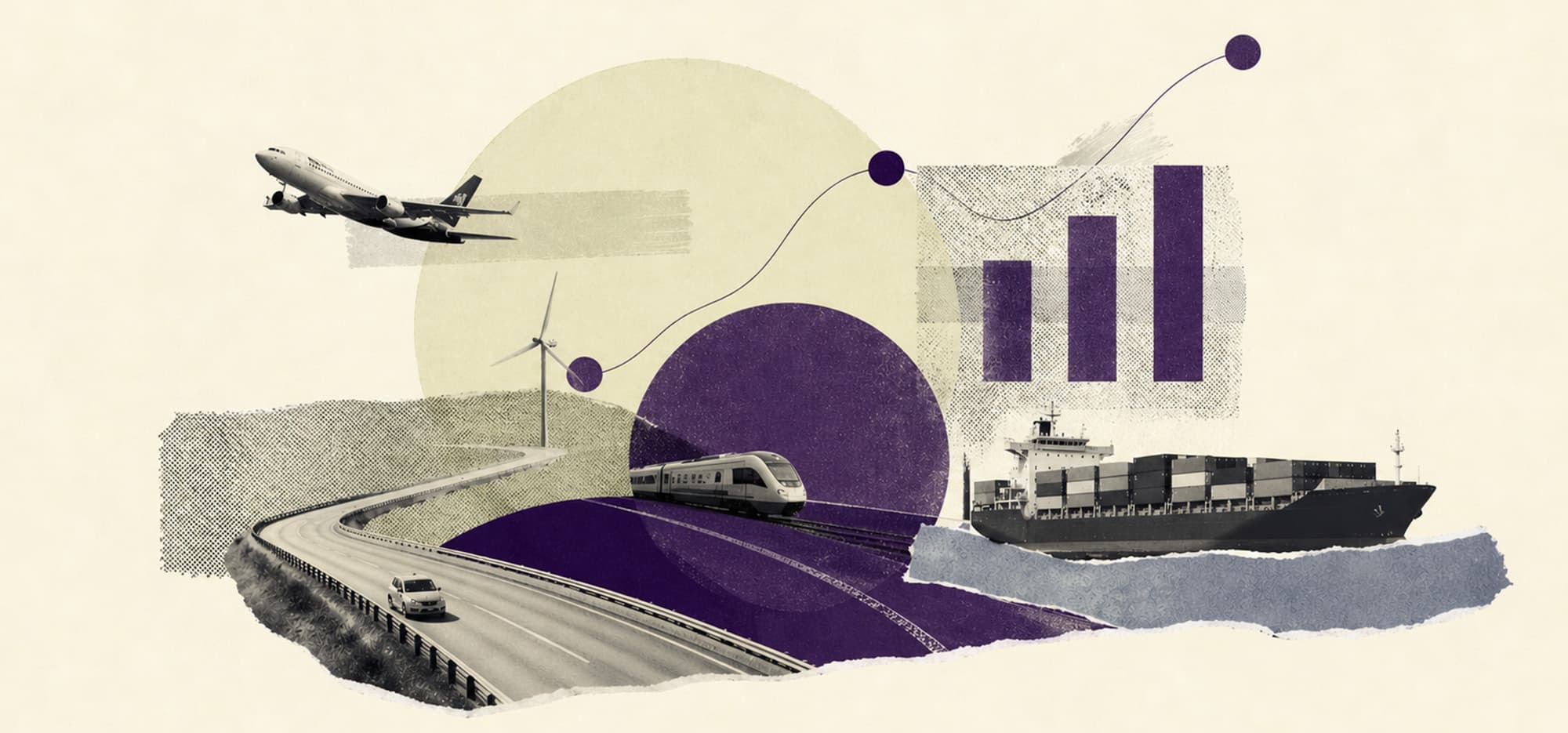
The Economic Policy Council 2016 examines Sweden’s national policy for investment in transport infrastructure. In the report, the researchers identify a number of grave system failures in the present policy:
Unrealistic calculations. The economic calculations used to assess social profitability of the major transport infrastructure investment projects systematically underestimate costs and overestimate benefits.
Unprofitable railway investments. The Economic Policy Council’s examination reveals that almost all completed, ongoing and planned railway investments was socially unprofitable at their adoption. This applies to the North Bothnia Line, the Bothnia Line, the West Link, the City Tunnel in Malmö and the high-speed railways between Stockholm and Gothenburg and between Stockholm and Malmö.
It is not cost efficient to use railway investments to achieve emissions targets. It is considerably cheaper to use other measures, such as a carbon tax on fuel.
Higher benefits are possible. An examination of the projects in the national investment plan for 2010‒2021 shows that 62 percent of the budget would have been sufficient to finance those projects that were socially profitable.
“If the government had based their priority on social profitability, benefits would have been SEK 42 billion higher,” according to Harry Flam, the chairman of the Economic Policy Council.
The Economic Policy Council suggests the following measures to improve Swedish infrastructure policy:
Introduce a committee of independent experts. The assumptions underlying the economic estimates for investments in transport should be decided by a permanent and independent committee of experts under the Ministry of Finance.
Review project calculations. Independent and random examinations of project estimates in the national investment plan should be introduced to ensure consistency and impartiality. Such a model is applied in Norway.
Make costs transparent. If the national investment plan does not give priority to the most socially profitable projects, this should be motivated and the cost for this should be detailed. The government should also clearly describe the projects that has been removed from the plan.
“Our proposal is intended not only to increase the benefits to society of the resources allocated to infrastructure, but also to increase transparency in transport policy decision making. It should be clear to citizens on what basis decisions are taken and what the consequences are”, says Harry Flam.
The SNS Economic Policy Council 2016 is comprised of of Harry Flam (Chairman), Professor Emeritus at the Institute for International Economic Studies, Stockholm University, Maria Börjesson, Associate Professor at the Centre for Transport Studies, Royal Institute of Technology, Ulrika Mörth, professor at the Department of Political Science, Stockholm University, and Jan-Eric Nilsson, Professor at the Swedish National Road and Transport Research Institute (VTI).