Skip to content
Research report | 5/21/2021

Constant changes – on organization, leadership and work environment in elderly care

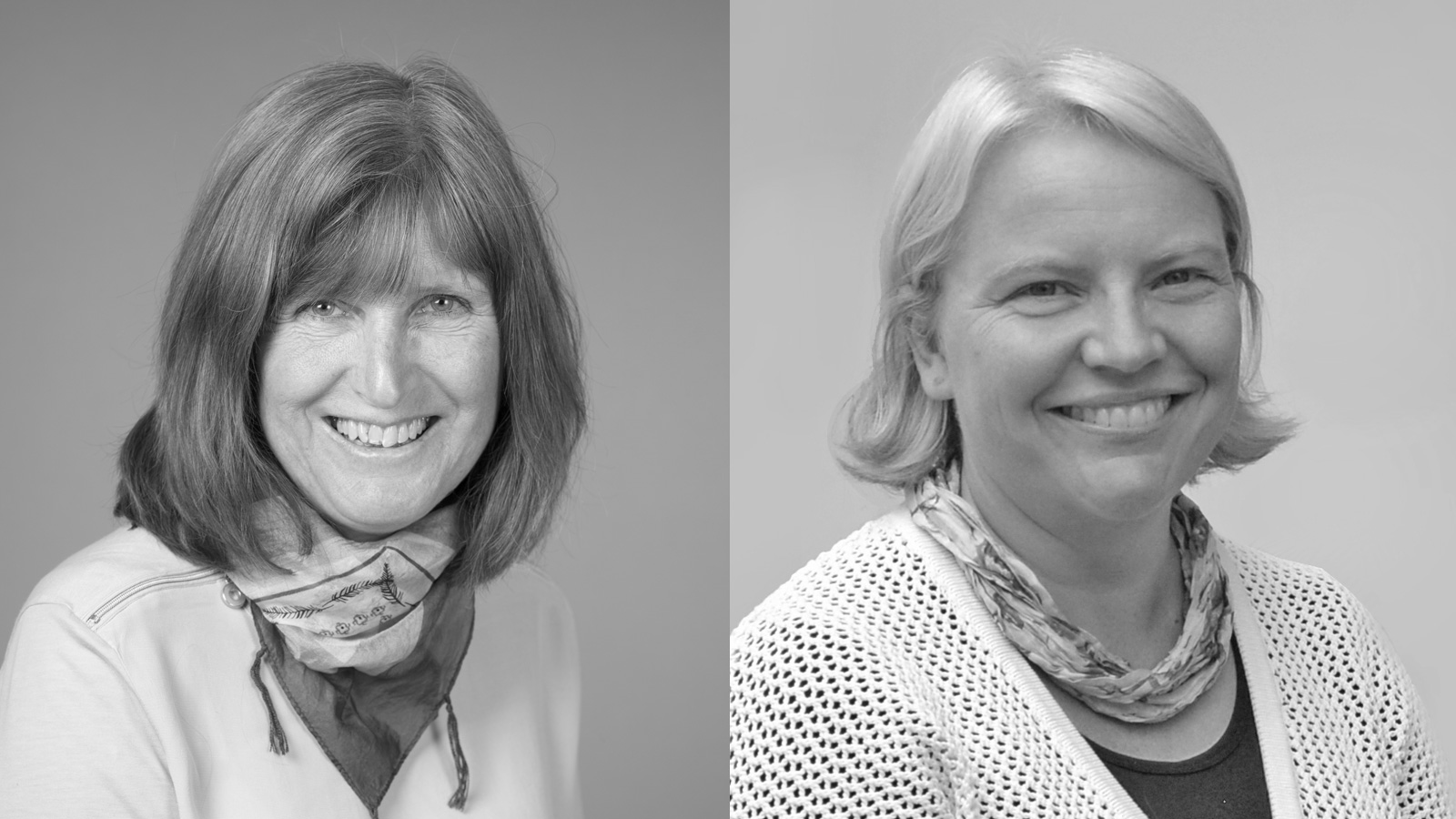
5/21/2021 - A prerequisite for addressing the problems facing the Swedish elderly care sector concerns improving the work environment. There needs to be a clearer link between top management and the employees at the facilities, in addition to fewer employees per manager. This is argued by researchers Kristina Westerberg and Maria Nordin in a new SNS report.

Swedish elderly care currently accounts for almost twenty percent of municipal expenses. Furthermore, an aging population means that these activities will face increasing pressure in the future. Despite the fact that several initiatives related to elderly care have been launched, a number of shortcomings are recurrently highlighted, most recently by the Swedish Corona Commission.

In a new SNS report, researchers Kristina Westerberg and Maria Nordin describe how the organization and work environment in elderly care have responded to changes over the past three decades. Their primary focus is on the economic crisis in the 1990s, the transfer of responsibility for elderly care from regions (at the time referred to as county councils) to municipalities in 1993 and the increased level of market adaptation in terms of managing public activities.

These changes led to more fragile and sicker elderly individuals entering elderly care at the same time as increased cost control led to more documentation and reporting. There was a shift in focus in elderly care resulting in more emphasis on individual care and a clear focus on the users. However, the researchers also argue that these changes resulted in less focus on the employees’ work environment.

“This is still visible today, 30 years later, when the Swedish Work Environment Authority performs inspections indicating that top management is not always aware of work environment problems or that this is part of their responsibilities,” says Kristina Westerberg, professor emerita of psychology at Umeå University.

The report compares Swedish elderly care with elderly care in other countries. A comparison between Spanish and Swedish elderly care shows that the former is organized in a more hierarchical fashion with more managers, smaller work teams and a clearer separation of roles among the employees. The Swedish employees to a greater extent report that they intend to look for another job. They also describe the quality of care as being lower and report more symptoms of poor health compared to their Spanish counterparts.

“The flat Swedish organizations do not seem to offer the expected benefits. Top management has a harder time reaching and influencing their employees at Swedish workplaces. In our material, Swedish managers could be in charge of up to 60 individuals, while the corresponding figure for Spanish managers was a maximum of 19 individuals,” says Maria Nordin, associate professor and senior lecturer of psychology at Umeå University.

The report also refers to a comparison with other Nordic countries, where employees working in Swedish elderly care report deteriorating working conditions between 2005 and 2015 not seen to the same extent in Finland, Norway and Denmark.

The authors point out that there are large variations in Sweden where many organizations work very well but that certain structures tend to reoccur and create problems. First and foremost, there is an imbalance between demands and resources in the form of, for instance, perceived support from the organization, proximity to the manager and opportunities to grow and develop. The report describes several development projects and initiatives having been carried out in the Swedish elderly care sector seeking to improve quality. In general, however, the long-term effects of these appear to be limited.

“In order for elderly care to move forward, work environment issues need to be raised to the highest level. Without a good working environment, there is a risk that commendable initiatives related to competence, training and development currently being discussed end up amounting to nothing,” says Kristina Westerberg, professor emerita of psychology at Umeå University.

This report is published within the framework of the SNS research project Health care in the 21st century.
More from Health Care in the 21st Century

  • SNS Research Brief Health Care

    SNS Research Brief 76. Hospital bed capacity and ED crowding – The impact on patient safety

    Sweden has the lowest number of hospital beds per capita in Europe. In a new SNS report, researcher Björn af Ugglas shows that a shortage of hospital beds and crowded emergency departments can be associated with increased mortality. To reverse this trend, it needs to be clarified who is responsible for this lack of capacity in Swedish hospitals.
  • Research report Health Care

    The future governance of Swedish healthcare

    The state must take greater responsibility for the necessary transformation of the healthcare sector in terms of increased person-centeredness, increased digitalisation and a strengthened primary care sector. This is argued in a new SNS report by Anders Anell, Professor at the Lund University School of Economics and Management. Among other things, he proposes increased state funding and a nationally regulated choice of healthcare provider based on two levels: one primarily consisting of digital clinics and one consisting of physical clinics targeting the elderly and others.
  • Research report Health Care

    E-health as apps – data protection and data sharing

    The number of digital health services has exploded over the last decade, while Swedish legislation has a hard time keeping up. Existing and future regulations need to be adapted to IT systems and solutions, according to law Professor Cecilia Magnusson Sjöberg in this SNS report. At the same time, however, we need to avoid overly technology-specific solutions, which tend to become obsolete quite rapidly. Instead, Magnusson Sjöberg recommends building test environments where a legal perspective plays a proactive role in creating legitimate IT solutions.
  • SNS Research Brief Health Care

    SNS Research Brief 62. The volume-outcome relationship in healthcare

    Research has consistently found that hospitals with higher patient volumes have better patient outcomes than smaller hospitals, more or less regardless of...

Other research report on Health Care

  • Coordinating care of the multimorbid elderly in Sweden – lessons learned from practice and research

    Older patients face medical risks as coordination between municipalities and regions is failing. Clearer central government instructions regarding these types of collaborations are necessary, according to Paula Blomqvist and Ulrika Winblad in a new SNS report.
  • Covid-19 in nursing homes as experienced by employees

    Employees highlight great challenges in nursing homes during the pandemic. Their experiences offer important lessons for the future, according to Sara Erlandsson, Petra Ulmanen and Sara Wittzell in a new SNS report.
  • Reliable Control and Organization of Welfare

    Trust-based governance has been introduced in several Swedish municipalities and regions. However, trust is not something that can be mandated from above, according to six researchers in the fields of work science and business administration in a new SNS report.
  • Measuring the Value of Elderly Care

    Swedish elderly care has undergone significant changes in recent years and is now being developed using new welfare technologies. But is this in line with what the elderly want? Without properly analyzing what the elderly want, this development risks reducing their quality of life, according to researchers Sara Olofsson and Ulf Persson in a new SNS report.

Subscribe to our Newsletter

Stay updated with our latest insights, seminars and research news.